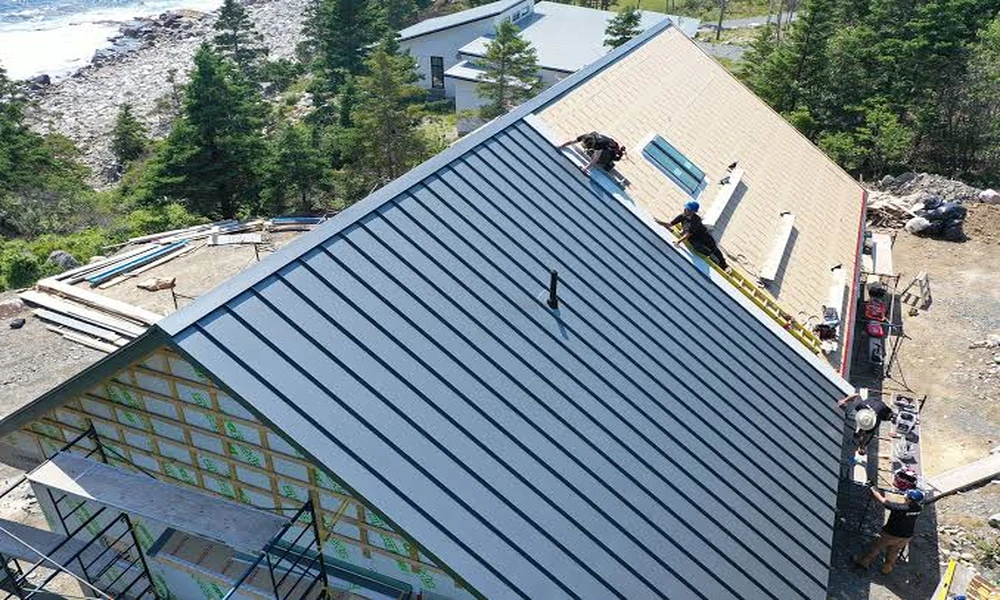

Ask almost anyone why they ruled out a metal roof and the answer comes back fast. Too loud in the rain. They are picturing a tobacco barn or a carport, where rain drums on bare panels screwed to open wooden strips. Put that same metal over solid decking and a layer of underlayment, the way it goes on a house, and a thunderstorm sounds much like it does under shingles.
That one misunderstanding sums up the whole debate. Asphalt shingles and metal roofing each carry a reputation that is only partly earned, and the right choice for a home in the Upstate depends less on reputation than on budget, how long you plan to stay, and how much weather your roof has to shrug off.
Homeowners in Mauldin, Fountain Inn, Greer and the towns around them face this question in nearly every reroof conversation. As a Simpsonville roofing company that installs both, refinedroofingco.com can price the two options side by side in a single free estimate, and owner Mark’s team handles the gutters, siding and storm repairs that often come up once the old roof is off. Below is how the two materials actually compare, one concern at a time.
The Number on the Estimate
Shingles win the first round and it is not close. Architectural asphalt shingles remain the most affordable full roof you can put on a house, and nearly every roofer in Greenville County installs them, which keeps labor competitive. A standing seam metal roof commonly costs two to three times as much for the same house, because the material costs more, the panels are often formed to length for each job, and the trim work around valleys, chimneys and walls takes specialized skill.
That gap shrinks once you stretch the math over time. A good shingle roof might need replacing once or twice over the period a well-installed metal roof keeps working. Whether that matters depends on how long you expect to own the home. If you plan to sell within eight or ten years, the extra spending on metal rarely comes back in full at closing, even though buyers do tend to notice it.
Not All Metal Is the Same Metal
Much of the confusion around metal roofing comes from lumping very different products together. On homes, you will usually run into three kinds.
- Standing seam panels, where the fasteners hide beneath raised seams and the panels can expand and contract freely in the heat.
- Exposed fastener panels, the ribbed sheets screwed straight through the face, which cost less but rely on rubber washers that wear out over time.
- Metal shingles and stone-coated steel, shaped to resemble slate, shake or tile for homeowners who want the durability without the look.
The finish matters as much as the profile. Painted steel with a PVDF coating, often sold under the Kynar name, holds its color far longer than cheaper polyester paints, which can chalk and fade within a decade on a sunny south slope. Exposed fastener roofs also need their screws checked and often replaced somewhere in the ten to twenty year range as the washers dry out, a maintenance step that rarely gets mentioned at the sales table.
How Each One Handles a Carolina Summer
Heat is where metal surprises people. Researchers at the Florida Solar Energy Center tested roof types side by side, and in their Flexible Roof Facility results a white metal roof kept the attic about 17 degrees cooler than a dark shingle roof, while a reflective brown metal shingle ran more than 21 degrees cooler at its peak.
That matters in the Upstate, where ductwork usually runs through the attic and July afternoons push attic temperatures far past the air outside. Color still does most of the work. A dark metal roof with ordinary paint will not perform like a light reflective one, and a light colored shingle helps too, just not as much.
Shingles fight the heat at a disadvantage because asphalt slowly dries out and stiffens with every summer it bakes through. Good attic ventilation slows that process for either material, but it can only do so much for a dark shingle facing west.
Wind, Hail and Falling Limbs
The Upstate does not see hurricanes often, but it sees what is left of them. Helene’s remnants in 2024 brought down trees across Greenville County, and spring and summer thunderstorms throw sharp gusts several times a year. Properly installed standing seam panels clip to the deck and hold up well against wind. Shingles depend on their adhesive strips sealing in warm weather and on correct nailing, and older shingles that have lost their seal tend to lift first.
Hail is more nuanced. Metal rarely leaks after hail, but it can dent, and some insurance policies exclude purely cosmetic damage to metal roofs, so it is worth reading the policy before assuming a dented roof is a covered one. Impact rated shingles, tested under the UL 2218 standard, now give asphalt a stronger answer to hail than older shingles ever had. As for falling limbs, a heavy branch will damage either roof. Metal just tends to dent where a shingle roof punctures.
One persistent myth can be set aside. A metal roof does not attract lightning, and if lightning does strike, metal will not catch fire the way wood framing can.
Living With It Year After Year
Day to day, the differences are smaller than people expect, but a few stand out. Shingles are easy and inexpensive to repair, and almost any roofer can match them. Metal repairs require someone experienced with that specific panel, and replacing a damaged section may mean finding a color match years after the original batch was made. Metal sheds pine needles, leaves and algae growth more readily, while shingles in shady yards slowly collect all three.
Ice is an occasional Upstate concern. Snow and ice slide off metal in sheets, so snow guards above doorways and walkways are a sensible addition. Wide, flat standing seam panels can also show a slight waviness called oil canning, which is purely cosmetic and minimized with good installation and stiffening ribs.
Solar is the last practical point. Standing seam roofs accept solar panels through clamps that grip the seams without drilling, while shingle roofs need penetrations at every mount.
Choosing for the House You Actually Have
For a starter home you plan to leave in a few years, or a house in a neighborhood where the homeowners association favors uniform shingle colors, a quality architectural or impact rated shingle roof is a sound, economical choice. For a home you intend to keep for decades, one with a low-slope porch section, or one surrounded by tall trees and summer storms, metal starts to earn its higher price.
The best decision usually comes from seeing both priced for your specific roof rather than in generalities. Once the numbers sit next to each other and the plans for the house are clear, the choice tends to make itself.