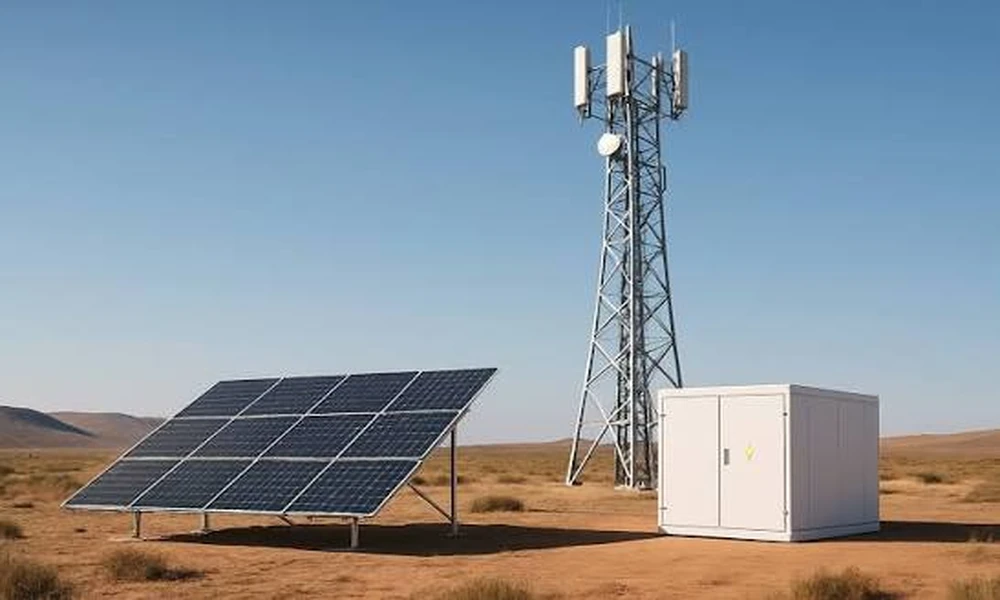

Battery Energy Storage System (BESS) Solutions offer a great advantage to remote work sites such as construction projects. BESS solutions store electrical energy in lithium-ion batteries that can be used off-grid. This guide looks at how this is the smart choice for construction companies and other applications that require power in remote and off-grid locations. It helps companies to stay connected, minimise delays through a lack of connection, lowers emissions for a sustainable project, and saves money.
What is a battery energy storage system (BESS)?
BESS solutions are made up of a battery energy storage system, a large-scale rechargeable battery unit that is designed to power an industrial or commercial range of applications. Using lithium-ion battery technology and housed in weatherproof container systems, BESS solutions allow for complex power management on off-grid locations and where a remote site may otherwise face difficulties securing a reliable energy source.
What are the components of a BESS?
There are three main components that you’ll find in BESS solutions:
- Electrochemical storage module – the battery cells are arranged in a series-parallel configuration and housed in rack enclosures. This helps to protect the system from any vibrations felt on site and potential impact.
- Power conversion system (PCS) – the bidirectional inverter converts AC to DC for charging, and DC back to AC for use on site. Some BESS solutions utilise advanced technology to operate without the need for external power.
- Energy management system (EMS) – monitoring all the important aspects of the system, including the State of Charge, State of Health, and temperatures of the cells. This helps to optimise charging cycles for the best performance levels.
Battery solutions for remote sites must meet the standards that ensure consistent and reliable electricity use.
What are the benefits of BESS solutions for remote sites?
There are clear benefits to utilising BESS solutions as a smart alternative to traditional diesel generators and grid power on remote sites and projects.
Optimise your energy use
BESS solutions allow you to store any excess energy that is produced during a period of low demand. What this means is that you can then use this energy during peak times, reducing reliance on the grid. Users can participate in load shifting and peak shaving for smarter energy and cost strategies.
Integrate seamlessly into your project
If there are existing power systems in place, BESS solutions can be integrated seamlessly, minimising disruption and ensuring efficiency is maximised at every stage. This should be the same whether you are installing BESS solutions as part of a wider change to the entire infrastructure or as a standalone power source for a one-off remote project.
Save money on your project
By lowering the need to use traditional diesel generators and decreasing reliance on the grid, BESS solutions allow you to significantly decrease your operational costs. It increases intervals between maintenance rounds, reduces dependency on traditional energy sources, and, in turn, leads to fuel savings and quieter site operations.
Lower your carbon footprint
Trying to work sustainably wherever possible is key in every industry. For remote and off-grid projects and sites, it is easier than ever before to do more than just pay lip service to the idea. BESS solutions reduce greenhouse gas emissions by minimising dependence on traditional generators that are powered by fossil fuels.
Support renewable energy
This push towards Net Zero and using renewable energy over traditional fossil fuels is achievable with the technology now available. BESS solutions make sure that there is no wasted energy and that renewable energy is available as and when you require it.
Even on the most remote and off-grid sites and projects, renewable energy sources can change the game. BESS solutions harness the power of battery technology to lower your carbon emissions, your dependency on traditional power sources, and your costs. It’s a smarter energy solution than traditional fossil fuel generators.