
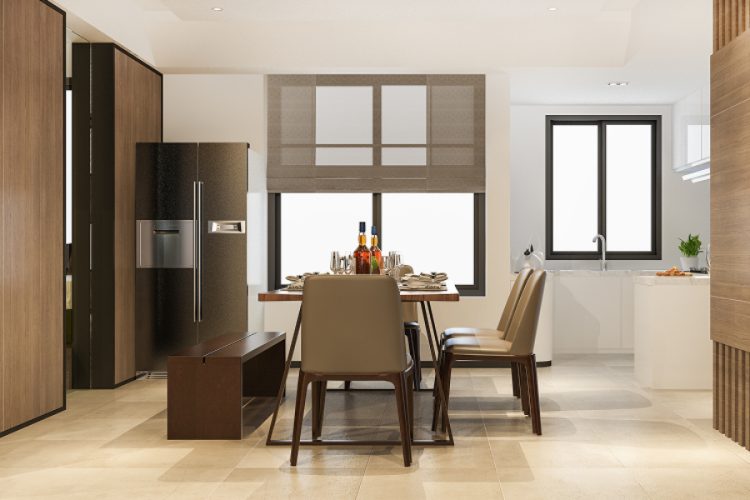
Modern HDB homes are no longer designed purely for function. Homeowners today expect a refined living environment that feels intentional, calm, and well-considered. Applying modern luxe interior design to HDB-style residential layouts requires careful planning to balance visual sophistication with daily practicality, especially within fixed layouts and space limitations.
Know the Constraints Before Designing
HDB flats come with structural boundaries, such as load-bearing walls, predefined service points, and compact room proportions. Effective interior design for residential spaces begins by working within these constraints rather than forcing unsuitable luxury elements into the home. Modern luxe interior design in HDB layouts focuses on subtle upgrades—clean lines, cohesive materials, and deliberate spatial flow—rather than dramatic structural changes that may not be feasible or cost-effective.
Instead of over-partitioning, designers often enhance openness through visual continuity. This approach might involve aligning flooring finishes across spaces or using glass panels and soft dividers to maintain separation without blocking light. The goal is to create a sense of calm and order that reflects luxury without excess.
Use Materials Strategically, Not Excessively
Modern luxe does not rely on lavish materials in every corner. Restraint is essential in HDB homes. Premium finishes such as engineered stone, textured laminates, brushed metal accents, and soft-touch surfaces are best applied selectively. Feature walls, kitchen backsplashes, and built-in cabinetry fronts are ideal locations to introduce higher-end materials without overwhelming the space.
This approach allows interior design for residential projects to remain cost-conscious while still delivering a refined outcome. The contrast between simple surfaces and carefully chosen luxe details creates visual depth and sophistication, which is central to modern luxe interior design.
Prioritise Built-In Storage With Clean Lines
Storage is critical in HDB-style residential layouts, but poorly planned cabinetry can easily make a home feel cramped. Modern luxe interiors rely on seamless built-ins that blend into the architecture of the space. Full-height cabinets, handle-less doors, and concealed storage systems reduce visual clutter and enhance spatial clarity.
Custom carpentry should be designed to serve multiple functions where possible—TV feature walls that integrate storage, bedroom wardrobes that incorporate dressing areas, or kitchen islands that double as dining counters. This approach ensures that interior design for residential homes remains practical without sacrificing aesthetic consistency.
Lighting as a Design Tool, Not an Afterthought
Lighting plays a defining role in modern luxe interior design, particularly in HDB flats where natural light may be limited. Rather than relying solely on bright overhead lighting, designers layer different light sources to shape mood and perception. Cove lighting, wall washers, and discreet recessed fixtures help soften the space and highlight textures.
Warm lighting temperatures are typically preferred to enhance comfort while reinforcing a sense of understated luxury. Well-planned lighting can make modest residential layouts feel more expansive and considered, elevating the overall interior design outcome without requiring major renovations.
Maintain a Neutral, Cohesive Colour Palette
Modern luxe interior design in residential settings favours restrained colour palettes—soft neutrals, warm greys, muted taupes, and earthy tones. These colours, in HDB layouts, help unify spaces and reduce visual fragmentation. Accent tones can be introduced through furnishings, artwork, or metallic details, but they should remain controlled and purposeful.
Consistency across rooms is key. Once colours, finishes, and textures flow seamlessly from living spaces into bedrooms and kitchens, the home feels larger and more refined. This cohesion is a hallmark of effective interior design for residential environments.
Focus on Proportion and Spatial Balance
Luxury in HDB homes is often felt rather than seen. Oversized furniture, heavy decor, or excessive ornamentation can quickly disrupt balance. Modern luxe interiors rely on proportion—selecting furniture that fits the space, leaving sufficient circulation areas, and allowing negative space to exist.
Design decisions should always be measured against how the space is used daily. Once functionality and aesthetics are aligned, the result is a residential interior that feels composed, intentional, and comfortable over the long term.
Conclusion
Applying modern luxe interior design in HDB-style residential layouts is about refinement, not extravagance. Homeowners can achieve a polished and liveable result by focusing on material restraint, integrated storage, thoughtful lighting, and spatial balance. Modern luxe becomes both attainable and enduring within the HDB context when interior design for residential spaces is approached with clarity and discipline.
Contact M2 Decor and let us help you translate modern luxe principles into functional, regulation-compliant residential layouts.